
Vegetable Update - August 20, 2026
UNIVERSITY OF MINNESOTA EXTENSION - www.extension.umn.edu
We were off last week visiting farms, schools, and co-ops in north central Minnesota last week, and wow, it is dry! Much of the state is in severe drought, and while some pockets of the state got rain over the weekend, that isn’t enough to make a dent in the deficit many areas are in (though it was enough to split tomatoes and melons).
As we reach fall, insect pests and diseases really become the star of the show.
Tomato and potato growers - Late blight is in the region
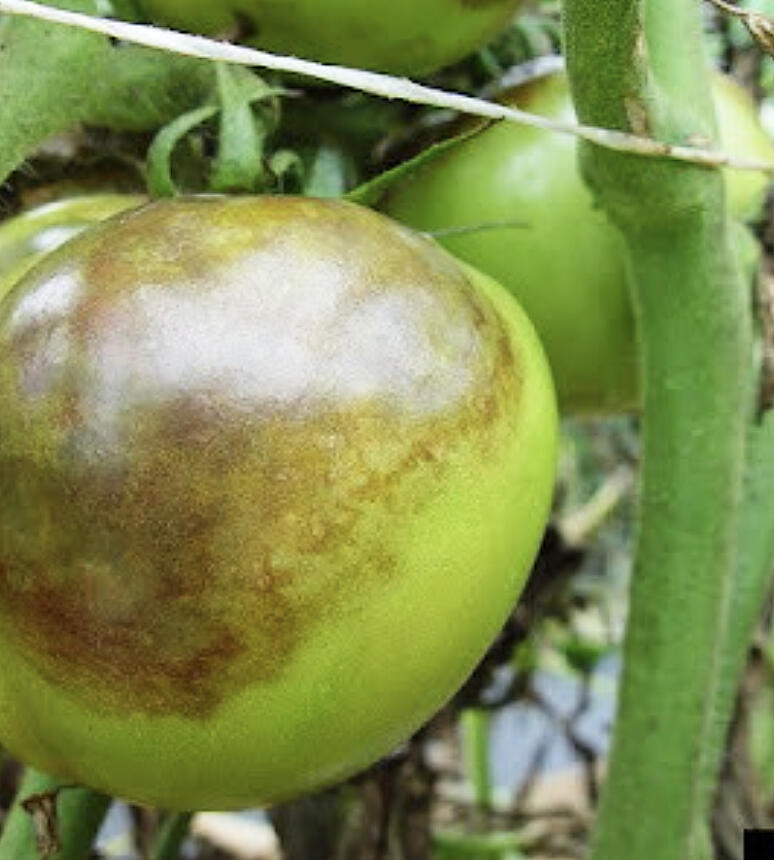
Late blight was confirmed last week in Southwest Michigan. Will this disease reach Minnesota? It's hard to say, but with time left in the growing season, it's worth knowing what to look for.
This disease is easiest to spot when humidity is high, and leaves in the center of a dense canopy are often the first to get infected. Leaf spots are a brown-gray, sometimes described as greasy. You may see white spores on the underside of the leaf. As spots grow, they turn darker brown with grey-green edges, and spread to the petiole and stem, turning them brown.
 |
| Late blight causes distinct hard, brown areas on unripe tomatoes. Photo: Gerald Holmes, Strawberry Center, Cal Poly San Luis Obispo, Bugwood.org |
 |
| Late blight on a potato leaf. Pathogen causes brown areas with diffuse edges, almost like watercolor. Photo: Gerald Holmes, Strawberry Center, Cal Poly San Luis Obispo, Bugwood.org |
See this page for a refresher on this disease and more pictures of what to look for. If you suspect you’ve found late blight, reach out and we can work on diagnosis. This disease can be very destructive, so if the pathogen is in Minnesota, it is important for all growers to know.
Late blight products are most effective before infection is present. Products for this disease are specific – as late blight isn’t a fungus (it is most closely related to phytophthora). Check for effective products in the Midwest Vegetable Production Guide. Infected plants should be removed and destroyed.
Crop Updates
Cucumber: Anthracnose is being spotted in some fields and high tunnels. The symptomatic leaf spots of this disease are tan and diffuse, so not bounded by veins in the leaf. They can grow quite large, up to an inch of diameter. As the lesions expand, the centers can fall out – meaning this is the rare “hole in leaf” type symptom that isn’t caused by insects.
 |
| In the background you can see anthracnose lesions are just getting started, and in the foreground the center of more expanded lesions are falling out. Photo: Gerald Holmes, Strawberry Center, Cal Poly San Luis Obispo, Bugwood.org. |
Melons: Melon harvest continues. In general it’s been a pretty good year for melons, yields and quality both seem high on most farms we’ve visited. You’re likely starting to cut back on irrigation already as melons mature, but this time of year it’s prudent to be extra mindful about when you’re watering. There are a lot of diseases in cucurbit fields that can generally be kept at manageable levels through harvest, but that can also cause widespread damage if conditions are right. Watering too much, or watering at night when water will stay on the leaves for many hours, can tip the scales toward widespread damage.
Melon harvest: See our “A quick guide to harvesting and storing melons, squash, and pumpkins” for tips on figuring out when to harvest. We’re also excited to share that a colleague of ours in Indiana is doing postharvest research on a wide variety of melons this summer. We’ve written about how cantaloupe and musk melons are notoriously difficult to harvest, because there’s so much variability across varieties in how much they will continue to ripen off the vine. We should be able to share some preliminary results from them this winter to inform your seed purchases for next year.
Pumpkins: We’ve seen some very orange pumpkins for mid-August. While the cool mornings are definitely putting people in a fall mood, you might find yourself needing to hold onto some fruit until markets are ready. If you have orange fruit and vines that are declining because of lack of nitrogen, powdery mildew, or squash bug, remove pumpkins from the field. Ideally, you want them covered and dry until customers want them.
 |
| Pumpkins and squash become vulnerable to sunburn when the canopy dies back. Photo: Marissa Schuh, UMN Extension |
Tomato: We are in peak tomato. From high tunnels to the field, tomatoes are coming in now that we finally have the cool nighttime temperatures (and the actual time) tomato fruit need to mature. While harvest was a bit delayed earlier this summer for cherry tomatoes and early slicers, we’re seeing later season tomatoes ripening beautifully. With dry conditions in so many places, there seems to be less less pressure than there is in wetter years during mid-August.
Blossom end rot is quite extreme in some places. While this disease is technically caused by a lack of calcium, it is really driven by moisture availability and by variety. Consistent water availability is key in preventing blossom end rot. If you have any varieties with loads of blossom end rot, make note – some varieties are very finicky and super prone to this disorder, so make a note to trial a different variety if one of this year’s varieties is a dud.
 |
| While the black fuzz on this tomato fruit is eye-catching, the location and tan coloration of the damage reveal the blossom end rot is the root problem. Photo: Marissa Schuh, UMN Extension. |
Onions are struggling. We’re seeing widespread damage from onion thrips, often resulting in small bulbs and leaves drying up early. In organic systems, horticultural oils can be effective for treating onion thrips, but they have to be applied regularly. Check the label for specific product instructions. Conventional growers have more options: see the Midwest Vegetable Production Guide for both conventional and organic product options. If you have neighbors who grow alfalfa, expect to see a big flush of onion thrips after they cut their alfalfa crop. Ideally, you could coordinate with neighbors ahead of time so you could cover your onions before they cut their alfalfa.
 |
| Onion thrips damage: light white speckling along the inner leaves. Photo: Natalie Hoidal, UMN Extension |
 |
| Severe onion thrip damage resulting in smaller bulbs and leaves drying up early (there are likely some secondary pathogens on the dying leaves in this photo too). Photo: Natalie Hoidal, UMN Extension |
