
Weekly vegetable update 6/2/2021
UNIVERSITY OF MINNESOTA EXTENSION - www.extension.umn.edu
The main story this week was frosty temperatures across the state, and a lot of last minute row cover applications. While many farmers made it through the night(s) without much damage, I got reports of major losses for growers in the northern part of the state for warm season crops and even some cool season crops like broccoli.

 |
| Frost damage in tomatoes. Both photos: Paul Bachi, University of Kentucky Research and Education Center, Bugwood.org |
Vegetable weather report
We can expect very hot weather across the state this week, with temperatures in the 90's, even in the far north. Keep in mind that temperatures this high pose a risk for heat stroke, and new employees especially may not feel comfortable asking for breaks. Try to work in more water breaks than usual, and keep an eye out for signs of heat stress (dizziness, headache, cool clammy skin, nausea, muscle cramps).
 |
| 7 day precipitation forecast June 2-9, weather.gov |
At this point soil temperatures have reached at least 65 degrees consistently across the state, so I will stop reporting weekly temps. You can always look up your soil temperatures at: https://app.gisdata.mn.gov/mda-soiltemp/
Crop updates
- Cole crops: Cole crops are coming along nicely. I've seen some heads emerging in early broccoli successions. Flea beetle pressure continues to be a problem; I've heard from multiple farms now that they lost their entire first succession (and even in some cases the second) to flea beetles.(Click here for more info about flea beetle management). Cabbage maggots have emerged across the state, but I haven't heard any reports of significant damage. across most of the state, and will emerge across the entire state within the week. I saw the first black rot symptoms of the season yesterday, but the very dry weather should help to reduce disease spread.
 |
| Black rot usually enters cole crop plants through hydrothodes, the pores on leaf edges where dew condenses in the morning. Avoid working in Brassica plantings until the leaf surface is dry and the dew drops on the leaf margins are gone. Photo: Natalie Hoidal |
- Sweet corn: Sweet corn is looking great, and most growers have at least 3-4 successions in the field. European Corn Borer is flying across the state, and the first eggs are expected this week. Scout for egg masses (in peppers too!). More about corn borer management and scouting.
 |
| European corn borer eggs. Frank Peairs, Colorado State University, Bugwood.org |
- Lettuce: The first successions of lettuce are about ready for harvest, at least in the southern part of the state. No reported issues so far. With the high heat this week, bolting may be an issue. Keep your soil cool by irrigating regularly.
- Onions: With the very hot, dry weather ahead of us, make sure you're keeping an eye out for onion thrips. We wrote about onion thrips in our winter vegetable series - check out our recent article to learn more.
- Garlic: Same update as last week - Garlic is generally looking good. Plants are beginning to shift their energy towards bulb production, and will be doing so for the next month or so. Keep your soil moisture consistent for larger, more consistent bulbs.
- Asparagus: At this point in the season, growers should consider ending harvest of plantings that are less than 3 years old. If growth and spear emergence is slowing down, spears are becoming thinner, or small (<6 inch spears) are producing ferns, you should finish harvesting. Harvest all remaining spears (even the small ones), fertilize, and remove weeds. Continue to irrigate throughout the season. More info in the UMN asparagus guide.
- Potatoes: Potatoes are emerging and growing quickly. Now is the time for preventative management of potato beetle including row covers, trenches, and preventative insecticides like neem and Bt.
- Cucurbits: Most cucurbits are in the field at this point. If you suffered frost damage, it's likely not to late to re-plant. Pumpkins and squash can definitely be re-planted. Melons and cucumbers will likely only be a couple of weeks behind if you re-start them asap.
 |
| Frost damage in cucumber, Charles Averre, North Carolina State University, Bugwood.org |
- Tomatoes: Many growers lost tomatoes this week. At this point it's way too late to re-plant, but you may be able to pull together some leftover transplants from other farms. This will be a good week to prune, with plenty of dry, warm weather to promote clean wound-healing.
- Peppers: Peppers are now mostly planted. Just like with tomatoes, if you suffered damage from the frost it's way too late to start from scratch, but neighbors may have leftover transplants to share. I got one report of corn borer in high tunnel peppers this week. More info about corn borer management in peppers.
Problems in the field and things to anticipate this week
Cucumber beetles are emerging, and so is bacterial wilt
- Cantaloupe 1 beetle / plant
- Cucumber 1 beetle / plant
- Watermelon 1 beetle / plant
- Squash 5 beetles / plant
- Pumpkin 5 beetles / plant
 |
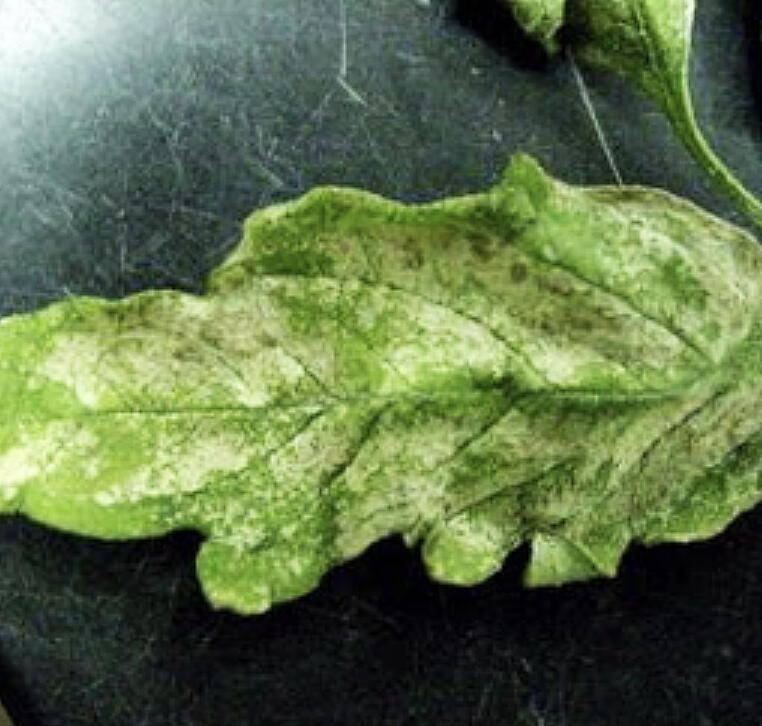
| Gerald Holmes, Strawberry Center, Cal Poly San Luis Obispo, Bugwood.org |
June nutrient management
- If you're growing on raised beds vs. open fields, there's often an assumption that the actual area in production is less, and therefore you can use less fertilizer (e.g. on a 5 foot bed system, 2 of the 5 feet are rows vs. actual beds where plants are growing, so we can use 3/5 of the fertilizer recommended in the nutrient management guide, right?). Unfortunately, this isn't quite accurate. Plants grown in open fields also have open rows, and often the yields in raised bed systems are a bit higher, which means the plants grown in these systems require the same amount of fertilizer, if not more to reach the same yield.
- Sometimes growers will try to reduce the fertilizer rate by adding it directly at the base of each plant at transplanting vs. broadcast applying. One risk of this approach is that you could burn your plant roots if they are directly in contact with too much fertilizer. A better approach is to either incorporate fertilizer into beds ahead of time, or incorporate it near, but not directly touching the row of plants.
 |
| If you're adding fertilizer after plastic mulch, you can make a few holes specifically for fertilizer so that it's not directly in contact with your plant roots. Photo: Charlie Rohwer |
Educational opportunities
