

Watch for pests in holiday greens
UNIVERSITY OF MINNESOTA EXTENSION - www.extension.umn.edu
Our partners at the Minnesota Department of Agriculture (MDA) publish the Plant Pest Insider newsletter. The November 24 edition includes information on spotting and reporting the following pests that are commonly found this time of year on holiday trees, wreaths and garlands.
Insects and diseases can hitchhike on trees and holiday greenery brought into Minnesota from other states. The MDA inspects holiday products for elongate hemlock scale, boxwood blight, oriental bittersweet, Lymantria dispar (gypsy moth), and many other pests.
You can learn more about all of these pests and how to properly dispose of holiday greens on the MDA's Holiday Greenery Best Management Practices webpage.
If you see any signs of the following pests or others on your holiday greenery, please contact the MDA.
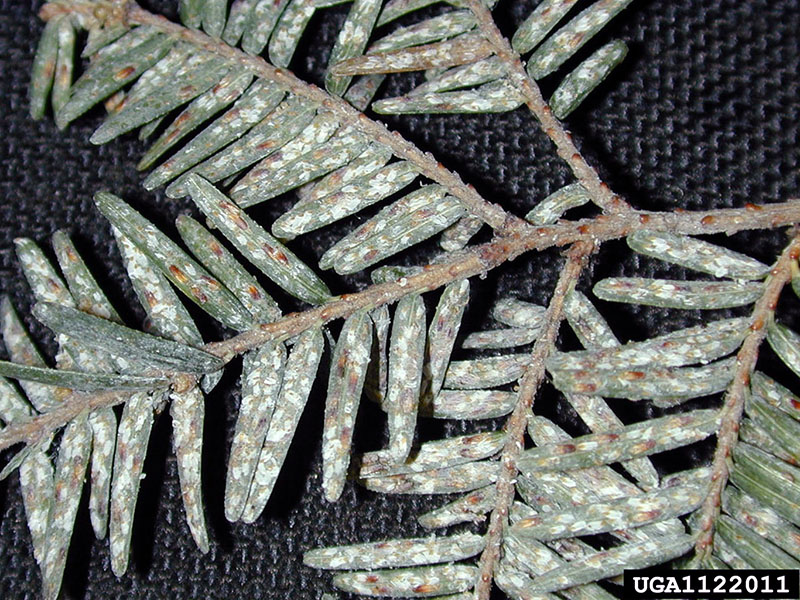
Elongate hemlock scale. Photo: Eric R. Day, Virginia Polytechnic Institute and State University, Bugwood.org
Elongate hemlock scale
Elongate hemlock scale (Fiorinia externa) is found almost exclusively on the underside of conifer needles. Given their small size and inconspicuous appearance, the elongate hemlock scale may appear to be dirt or debris to the untrained eye.
You can find more information on this site about Scale insects on Minnesota trees and shrubs.
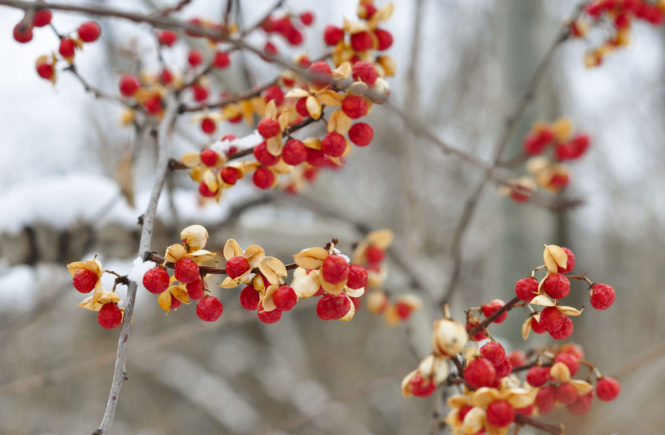
Oriental bittersweet
Oriental bittersweet
Oriental bittersweet (Celastrus orbiculatus) vines have been used in holiday decorations and other crafting items for many years. Fruiting branches, which have red berries and yellow fruit capsules, make wreaths charming but easily spread seed. If craft arrangements, such as wreaths, are placed outside, birds can eat the fruit and move the seed to new locations.
Oriental bittersweet is designated as a noxious weed on Minnesota's Eradicate List.
We also have information on identifying and controlling oriental bittersweet.
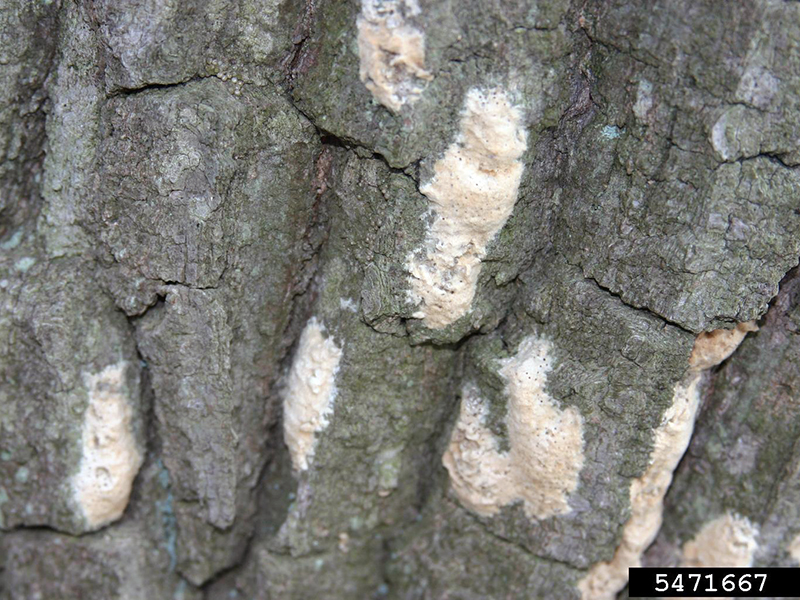
Lymantria dispar (gypsy moth) eggs. Photo: Leslie J. Mehrhoff, University of Connecticut, Bugwood.org
Lymantria dispar (formerly known as "gypsy moth")
Lymantria dispar lay their eggs in protected areas on both natural and artificial surfaces.
Christmas trees can have egg masses on trunks and branches. Egg masses are quarter-sized fuzzy, tan colored and contain 500 to 1,000 eggs.
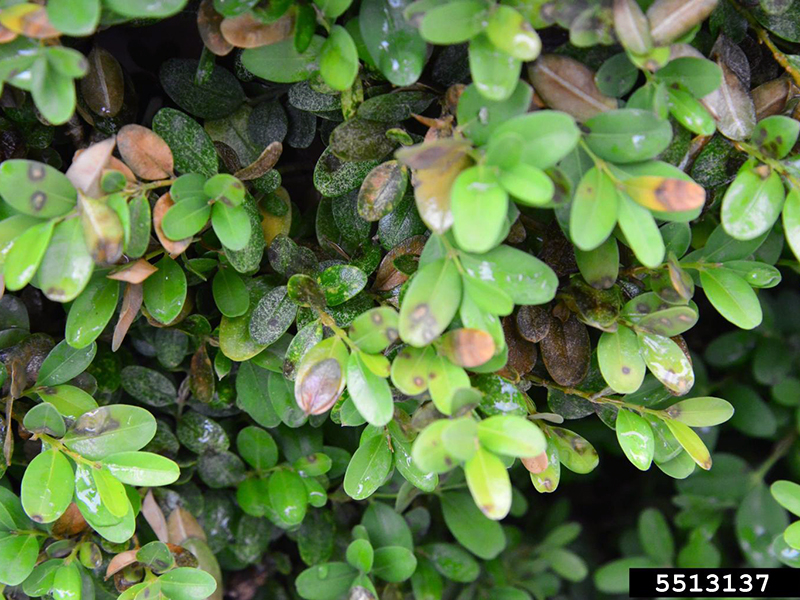
Boxwood blight. Photo: David L. Clement, University of Maryland, Bugwood.org
Boxwood blight
Holiday wreaths, garlands, and planters often contain shoots from boxwood plants. Boxwood is an evergreen shrub with dark green, rounded leaves.
Boxwood blight is caused by the invasive fungus Calonectria pseudonaviculata. This disease causes leaf spots, stem lesions, and leaf drop in boxwoods.
