
Vegetable Update - August 6, 2026
UNIVERSITY OF MINNESOTA EXTENSION - www.extension.umn.edu
This week has brought some needed relief from drought, heat, and wildfire smoke. Temperatures have dropped dramatically and conditions have been excellent for field work, allowing farmers to catch up on weeding and all of the other tasks that got delayed due to weather in July. We are officially transitioning into fall planning mode: planning for the shift towards more disease pressure that comes with cool nights, planning for fall planting, and wildlife pests becoming more of a problem as harvest for crops like melons and sweet corn arrives.
Scout and prep for an uptick in diseases
We finally have weather that is pleasant to experience. The catch of the cool morning is an uptick in dew on plants – which can provide the wet conditions fungal diseases need to get established, as well as the water needed for bacterial diseases to move around.
- Continue to scout weekly – when scouting, make sure you check the oldest leaves and the densest parts of the canopy, this is where diseases tend to get started.
- Remember we’re disease movers when working – try to work in plants only that are dry. Work and harvest in healthy plants, and end the day in patches where plants are diseaed.
- Done harvesting? Remove crops or destroy crop residue – the task list is always long, but if you have diseased area or areas you are done harvesting, managing the crop residue will help reduce the amount of pathogen hanging out on the farm. Managing pathogen load helps strategies like rotation be more effective.
Seeing suspected disease symptoms? We have a webpage where you can find lists of the common vegetable diseases in Minnesota, with pictures for ID as well as management options.
Sowing for fall and winter harvests
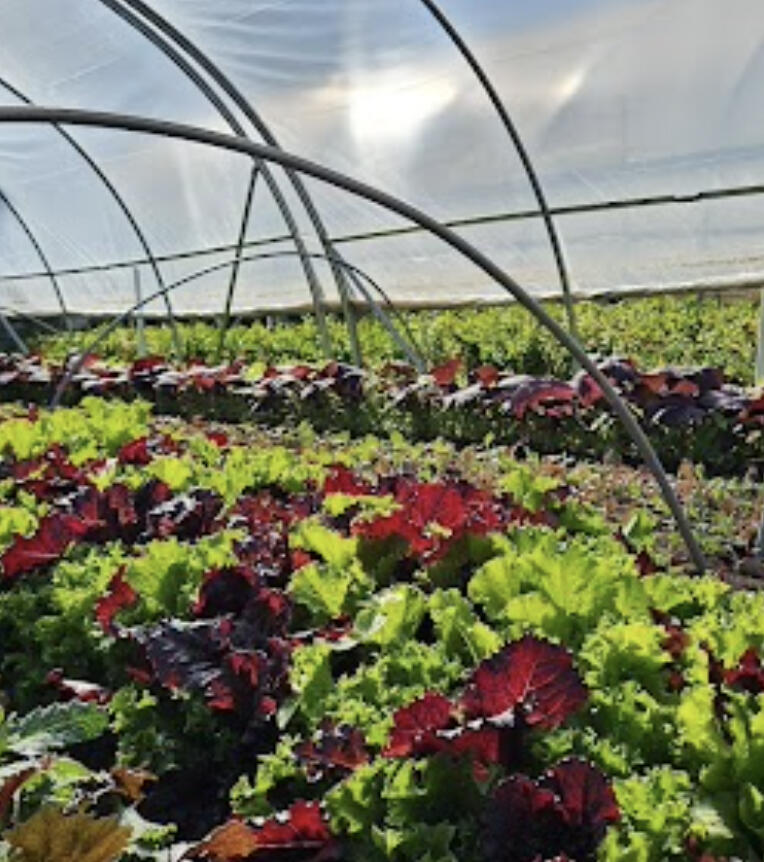
The fall growing season is generally becoming longer. While plenty of farmers welcome the first hard frost each fall and the end of the growing season, we’re seeing more and more people lean into the longer, more temperate falls to continue producing cold tolerant crops. High tunnels make this possible too: Minnesota now has over 1000 high tunnels. Unfortunately, the warm weather in the fall does not change the shift towards darkness. When day lengths drop below 10 hours per day (around November 1 in Minnesota), our crops slow way down too. So, planning for fall and winter harvest is really a game of planning around daylight. The Johnny’s winter growing charts are still the best resource we know for winter harvest planning. If you’re just getting into fall planting, start with the Tier 1 crops, those that are easiest / most reliable. These tend to be the leafy Brassicas and spinach crops that take between 5-9 weeks to mature (more like 5 for baby leaf, more like 9 for full leaf). If November 1 is our cut-off date, this means your last planting of full leaf crops like spinach and tatsoi should be around August 30th, and the last date for planting baby leaf spinach and Brassicas around September 20th. Planting later means these crops will more or less go dormant over the winter, and then be ready to harvest in February or March. If your goal is to harvest greens all fall, you should be planting now.
Is it worth it to pull your high tunnel crops early to plant a fall crop? It totally depends on your markets. If you have a big wholesale contract for tomatoes, probably not. If your cucumbers are winding down anyways from spider mites, powdery mildew, etc., pulling them to plant a few rows of greens is probably a great idea (as long as you have a market).
 |
| Photo: October lettuce crop at 10th Street Farm. Photo by Ellen Badger-Hanson |
Crop updates
Potato: As potato harvest ramps up, it’s a good time to review scab. Scabby potatoes are extremely common on market farms in Minnesota. It’s variety dependent (thin skinned potatoes are most susceptible; they also tend to be the best tasting potatoes, and therefore are more common on fresh market vegetable farms). Unlike most pathogens, it thrives in dry soils. Most of Minnesota has been in drought, and potatoes tend to be one of the last crops to get irrigated. It also does better in high pH soils, and most of Minnesota’s vegetable farms have relatively high pH soil (sometimes naturally, often due to heavy compost use). The bacteria that causes it, Streptomyces scabies, is abundantly common in a wide variety of soil types.
If you’re seeing scab, the best tools for future years are resistant varieties and consistent irrigation. The good news for this year? Potatoes with scab are still edible. They are ugly, so some customer education is necessary. The scabby areas are also more prone to secondary soft rot infections, so they should be eaten quickly.
 |
| Potato scab. Sandra Jensen, Cornell University, Bugwood.org |
Peppers: We are seeing low yields across the board in peppers. This is likely some combination of heat stress and bacterial leaf spot, which at this point is widespread across Minnesota. There is a widespread belief that reduced fruit set in peppers is correlated with too much nitrogen. However, this is likely not true. In one of our favorite books, The Physiology of Vegetable Crops, the authors show that peppers actually tend to respond quite well to high nitrogen rates. (Did we mention that working in Extension skews your book preferences in interesting ways?)
Tomatoes: We made it through the July heat waves and tomatoes are really starting to produce. However, the effects of the heat wave are still apparent in tomato quality. Cherries are generally doing fine, but larger slicers have a lot of yellow shoulder and internal white tissue disorder. Yellow shoulder is complicated, but heat stress plays a role. Internal white tissue disorder is primarily a heat response. When it's very hot outside, cell division progresses rapidly. Nutrients like calcium and potassium have limited mobility, so plants aren’t able to transport these nutrients quickly enough for them to reach new fruit tissue. These tomatoes are still 100% edible, they are just less flavorful. These disorders are also variety dependent. Our summers are only getting hotter, so keeping good notes on varieties that can withstand the heat and those that can’t is an important long-term strategy for healthy tomatoes in the future. Here's a nice little variety trial from Purdue looking at susceptibility to internal white tissue disorder.
On the positive side, no late blight has been reported in the US so far this year. All the leaf spot diseases are out, and will likely continue to spread now that we have morning dew.
Sweet corn: Large scale sweet corn harvest is underway.
Corn earworm trap catches in the region are still low, but we expect an uptick in the next week. We reviewed corn earworm management in last week’s issue, peek at it for a refresher if you’ve had wormy corn in years past.
Harvest time is also when we see damage from animals. Knowing which animal you have a problem with can help you figure out how to prevent damage next year – different animals are best managed with fences, scares, and trapping, so knowing your enemy is an important step before investing in prevention measures for next year. Documenting the damage they cause is helpful in accessing Department of Natural Resources programs for wildlife damage management.
- Birds: Birds are more likely if you are near a marshy area – red winged black birds are a common sweet corn feeder. Birds shred the husk as they feed, starting at the tip then moving down to the stalk. There will be no tracks, but there may be bird poop.
- Deer: Deer can damage corn through its life cycle, they sometimes eat seedlings, and this time of year like to browse on silks. Deer don’t have any incisors, so their feeding tends to be kind of ragged. Look for ears of corn on the ground, as well as hoof prints.
- Racoons: When raccoons feed, they tend to yank the ear down, then messily open the husks. They also leave behind tracks. Raccoons can also get into melons. These guys can be managed with trapping (peanut butter is a good bait).
 |
| Raccoon tracks in and around fields are a sign that they are your culprit. Photo: Rebekah D. Wallace, University of Georgia, Bugwood.org |
