

Planning and planting a healing garden
UNIVERSITY OF MINNESOTA EXTENSION - www.extension.umn.edu

Soft colors and textures, like those of Russian sage, enhance the calm feeling of a healing garden.
With this week’s warmer temperatures and rain, many gardeners are eager to jumpstart the growing season. Planning a healing garden is an easy, uplifting way to welcome spring, especially if you’re craving calm, comfort, and sensory richness.
Healing gardens rely on intentional plant choices and a simple, soothing design to support emotional, physical, and mental well-being, helping us unwind and reconnect with nature.
Start with soothing scents
Fragrance sets the tone for a relaxing outdoor space. Aromatic plants can reduce stress, promote calm, and make a garden instantly welcoming.
These scented plants fit the sensory-centered principles of healing garden design:
- Lavender (Lavandula angustifolia): Calming and best grown in containers or with winter protection in Minnesota.
- Thyme (Thymus vulgaris): Fragrant, hardy, and versatile.
- German Chamomile (Matricaria chamomilla): A gentle herb for soothing teas.
- Holy Basil/Tulsi (Ocimum tenuiflorum): An adaptogen that helps the body manage stress.
- Lemon Balm (Melissa officinalis): A citrus-scented perennial known for easing anxiety and improving focus.
Add plants that invite touch
Texture encourages you to slow down and engage with your surroundings. Mixing soft, smooth, and feathery foliage creates a comforting, immersive experience. A range of textures strengthens the garden’s grounding, restorative feel.
- Lamb’s Ear (Stachys byzantina): Velvety leaves offer soothing tactile feedback.
- Sedums (Sedum spp.): Smooth, fleshy foliage contrasts beautifully with soft textures.
- Ferns: Airy fronds add light movement and coolness.
Choose plants that bring movement and sound
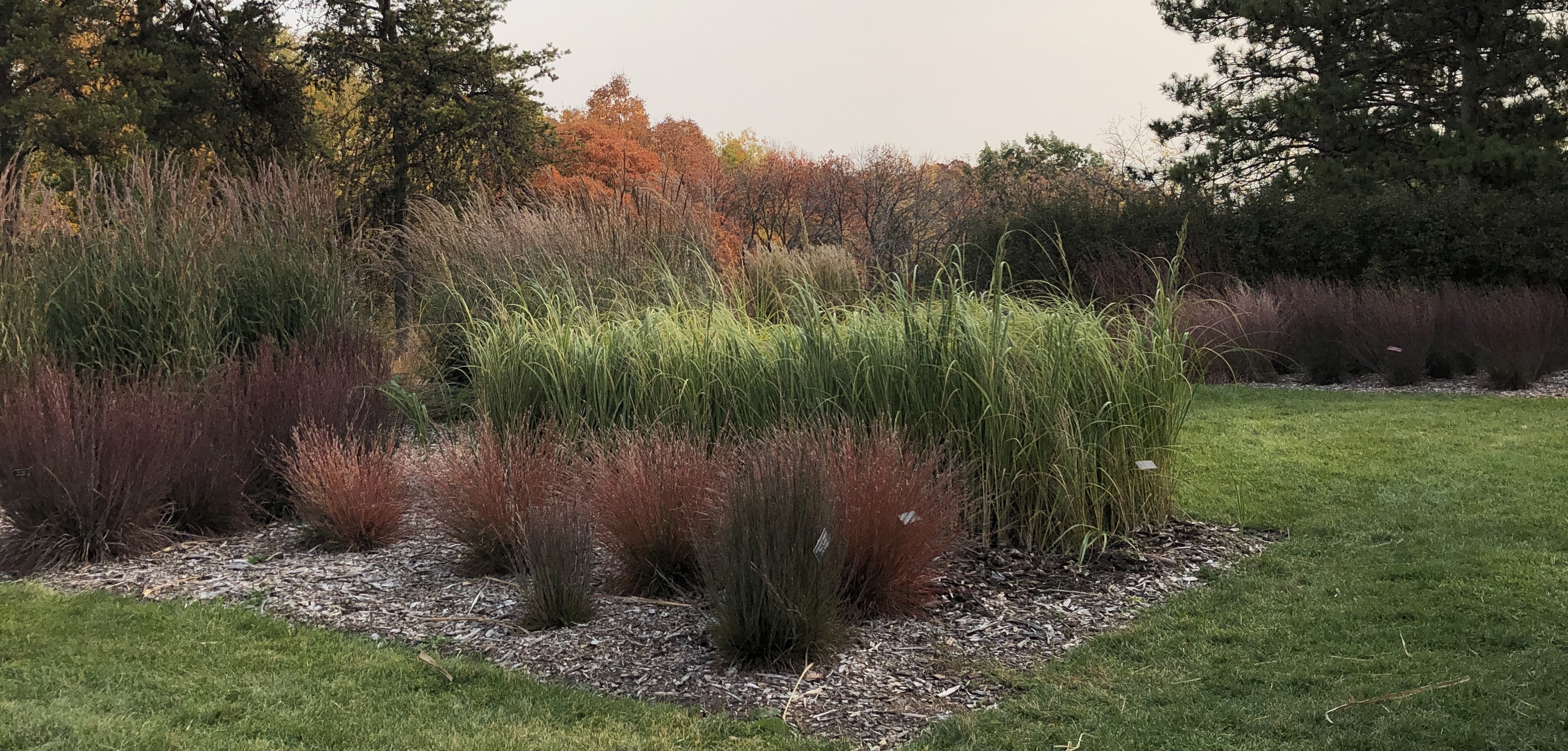
These native grasses, including little bluestem, add soothing swishing sounds to create a mediative atmosphere.
The sound of rustling leaves or swaying grasses can be deeply calming. Plants that move naturally in the breeze help create a peaceful, meditative atmosphere and add depth to the garden’s sensory experience:
- Pines (Pinus spp.): Needles produce a soft, whispering sound.
- Switchgrass (Panicum virgatum): Tall stems rustle gently.
- Little Bluestem (Schizachyrium scoparium): A native grass offering motion and sound.
Incorporate calming color and harmony
A soothing color palette helps tie the space together. Soft blues, purples, and pastels work especially well. Repeating colors builds visual calm and cohesion:
- Catmint (Nepeta spp.): Lavender-blue blooms in soft drifts.
- Coneflower (Echinacea purpurea): Purple and pink tones attract pollinators.
- Russian Sage (Perovskia atriplicifolia): Blue-violet plumes with graceful movement.
- Pastel Yarrow (Achillea millefolium): Peach, pink, and yellow clusters.
As you sort through seed catalogs, choose varieties that bring scent, sound, texture, and color into your space. A healing garden doesn’t need to be large, just intentional. It may be the grounding project your mind and spirit need as spring approaches.
