
Boehlke Farm reaches sesquicentennial milestone
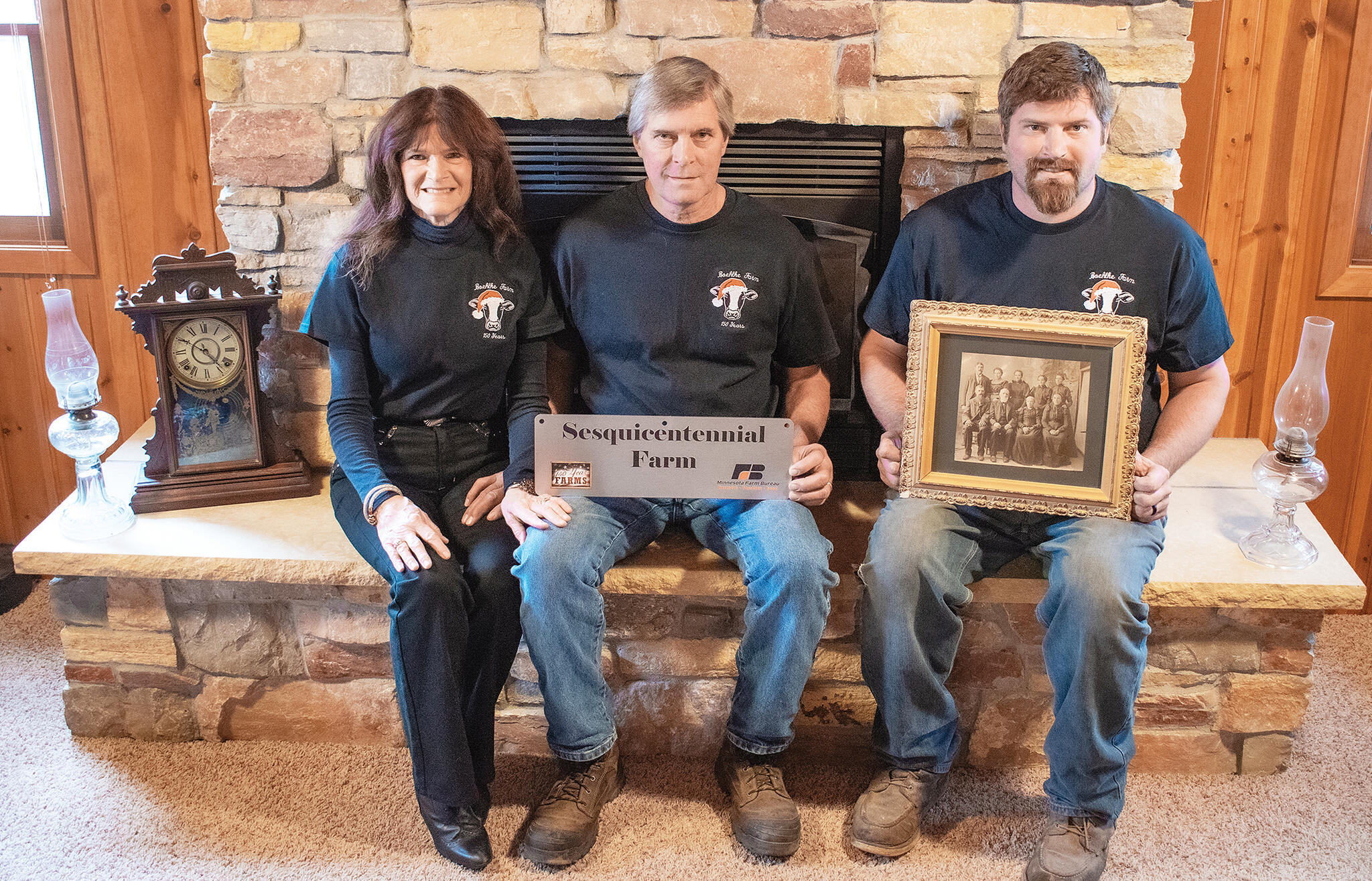
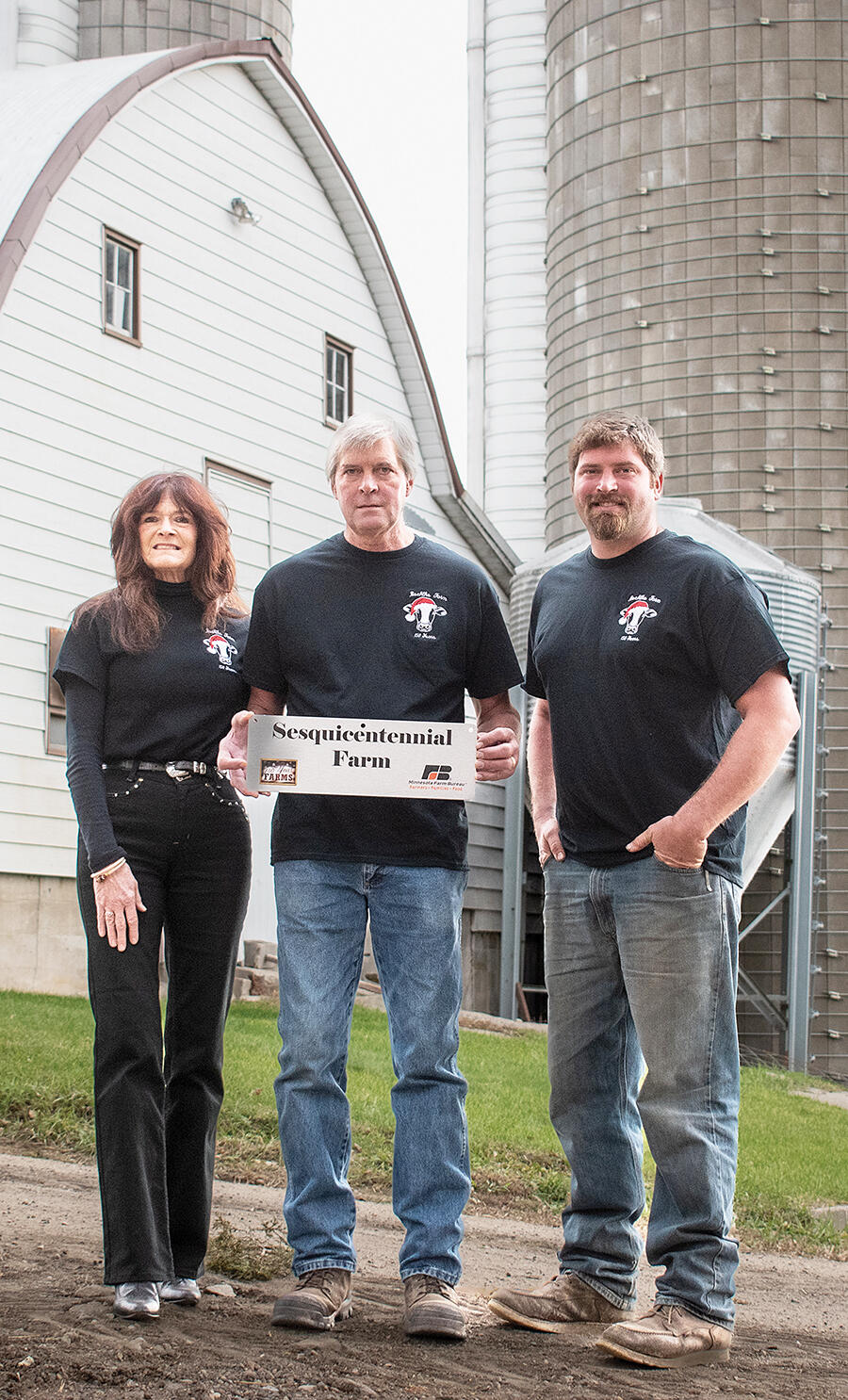
The Boehlke Family, of Waverly, has a long-standing history of farming, one that spans four generations and beyond. The Boehlke’s were recognized for reaching a coveted milestone, celebrating 150 years of farming in Wright County. The farm was officially honored and named to the 2025 sesquicentennial farm list through Minnesota Farm Bureau.
According to the Minnesota Farm Bureau, “Since the program began in 2008, 623 families have received the honor. To qualify, a family farm must be in continuous family ownership for at least 150 years, be 50 acres or larger, and currently be involved in agricultural production.”
“They invited the family to a Farm Bureau banquet and highlighted us at the State Fair,” said Rita (Hertzog) Boehlke. “In the Farm Bureau building, they had a video and display of all the sesquicentennial farms. They had us walk in the State Fair parade, which was really a treasure. It was a great experience and very moving. A lot of people were saying ‘thank you farmers;’ it was really special.”
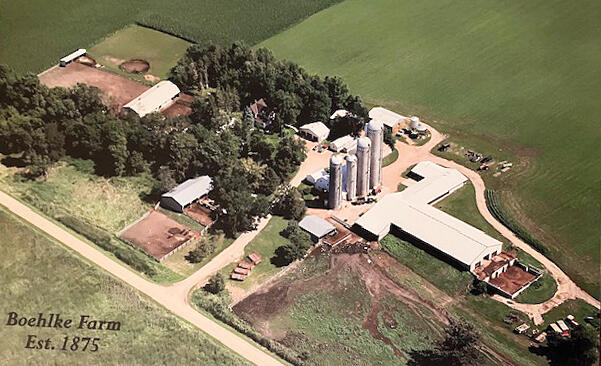
The 270-acre farm has seen a variety of changes over the years. Today, Eugene and Rita Boehlke, along with son, Eugene Jr., are all involved with day-to-day operations consisting of 100 dairy cattle, along with raising racehorses, which compete at Canterbury Park and other venues out of state. The Boehlke’s have two daughters, Brittani and Bridget.
History
Eugene’s sister, JoAnn Boehlke Dimino, shared a detailed history of the farm’s origins, which date back to 1875.
The farm was founded by Ludwig and Christina (Wendt) Boehlke, who emigrated from Oldenburg, Germany, on May 1, 1868, arriving in New York City aboard the Prince Albert. They traveled with three young children—John, Marie (Mary), and Frederick, who was just 11 months old. By 1870, the family had settled in Marysville Township, south of Waverly, an area now part of Woodland Township.
After working as a farm laborer, Ludwig purchased land in April 1875 from Chauncey W. Griggs, a St. Paul grocer and coal businessman who partnered with James J. Hill. The Boehlkes bought 69.57 acres for $5 an acre, laying the foundation for what would become a multigenerational family legacy. Ludwig first built a log house on the property, and four more daughters—Wilhelminia, Anna, Caroline, and Bertha—were born after the family settled in Minnesota.
In 1897, the farm passed to their son, Frederick, and his wife, Lillian Filipeck, of Waverly. That same year, they built the farmhouse that still stands today, using stone gathered from the land.
“We try to keep the house as it was,” said Eugene. “We brought some real woodwork back and keep the house somewhat original. There have been some changes, as things wore out, we replaced them.”
Frederick and Lillian raised four children, including Edward, who took over the farm in 1941. Two years later, Edward married Anna (Ann) Cafferty, of Winsted. Together, they raised eight children, while also enduring the loss of two infants. Edward built a successful dairy and crop operation and earned statewide recognition for exceptional corn yields in 1944 and again in 1957 through the DeKalb Agricultural Committee.
Tragedy
Much can happen in the span of 150 years, and with the good can come the bad. In June 1952, the family faced tragedy when a tornado destroyed nearly every building on the farm, sparing only the house, granary, and hog house. Edward was injured when the barn collapsed around him during milking, and the family lost its entire herd of 16 dairy cows. Edward’s mother, Lillian, died just eight days after the storm.
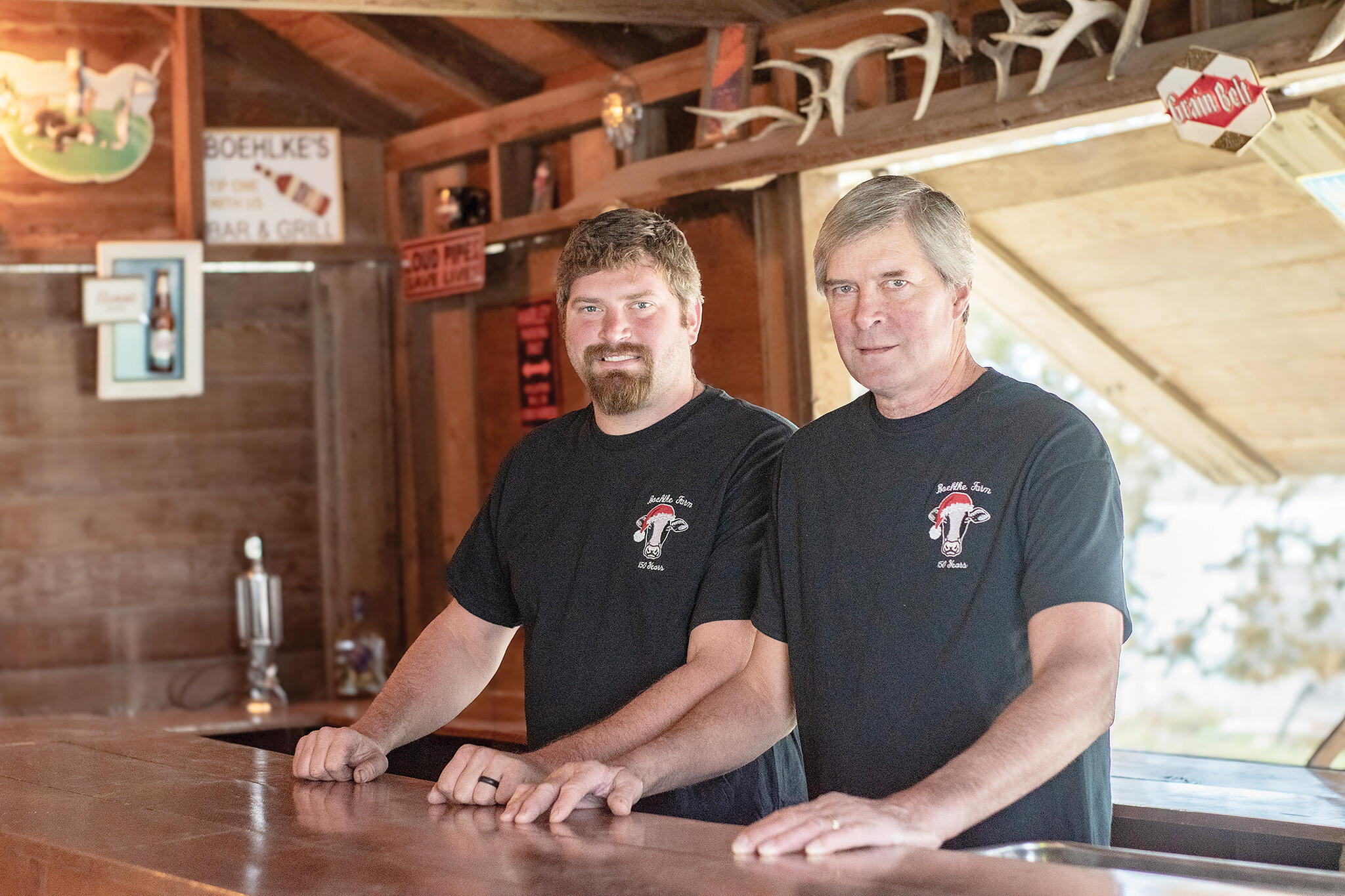
From that loss grew one of the farm’s most beloved chapters. When the barn was rebuilt by Eugene’s father, an upstairs dance floor was added using wood from the former Blue Note Ballroom in Winsted. Beginning in 1956, the Boehlke barn hosted public dances, weddings, anniversaries, and community celebrations into the early 1970s. A freestanding “Bar Room,” complete with a pine bar and ticket window, was built nearby and remains in use for family gatherings today.
Through the Years
Edward diversified the operation over the years, which at times included cows, hogs, chickens, along with crops of corn, soybeans, and wheat, adding mink farming in the 1960s, with as many as 400 mink raised at one time. The mink enterprise ended around 1970.
In 1975, Edward joined the Bongards Creamery Cooperative—an affiliation that continues today under Eugene and Rita.
Edward passed away suddenly on July 7, 1975, at age 60. Ann remained on the farm until her death in 2005, while their son, Everett, managed operations and modernized facilities. Eugene and Rita took over the farm in 1993.
Under Eugene and Rita’s leadership, the farm continued to grow. A free-stall barn was built in 1998, followed by a milking parlor in 2000. The dairy expanded to more than 100 cows, and for a time in the 1990s, the farm even included a small herd of bison. Eugene credits Rita and their family for the hard work and support that made the farm’s growth possible.
The Boehlke farm was officially recognized as a Minnesota Century Farm in 1989 and again honored in 2000 for 125 years of agricultural contributions. Today, the farm remains a working dairy and a place rich with memories. While some buildings have disappeared and others repurposed, the 1897 farmhouse, the post-tornado barn—now a calf barn—the smokehouses, and the Bar Room still stand.
The last barn dance was held in 2015 for the wedding of Brittani Boehlke. Her siblings, Bridget and Eugene Jr., also celebrated weddings and graduations there, continuing a tradition that spans generations. The sixth generation—10 grandchildren—can now be found helping with chores, riding tractors, and learning farm life from their grandparents.
From immigrant beginnings to 150 years of perseverance, the Boehlke farm stands as a testament to family, faith, and the enduring roots of agriculture in Wright County.
“We’re proud to see it stay in the family that long,” said Eugene.
