
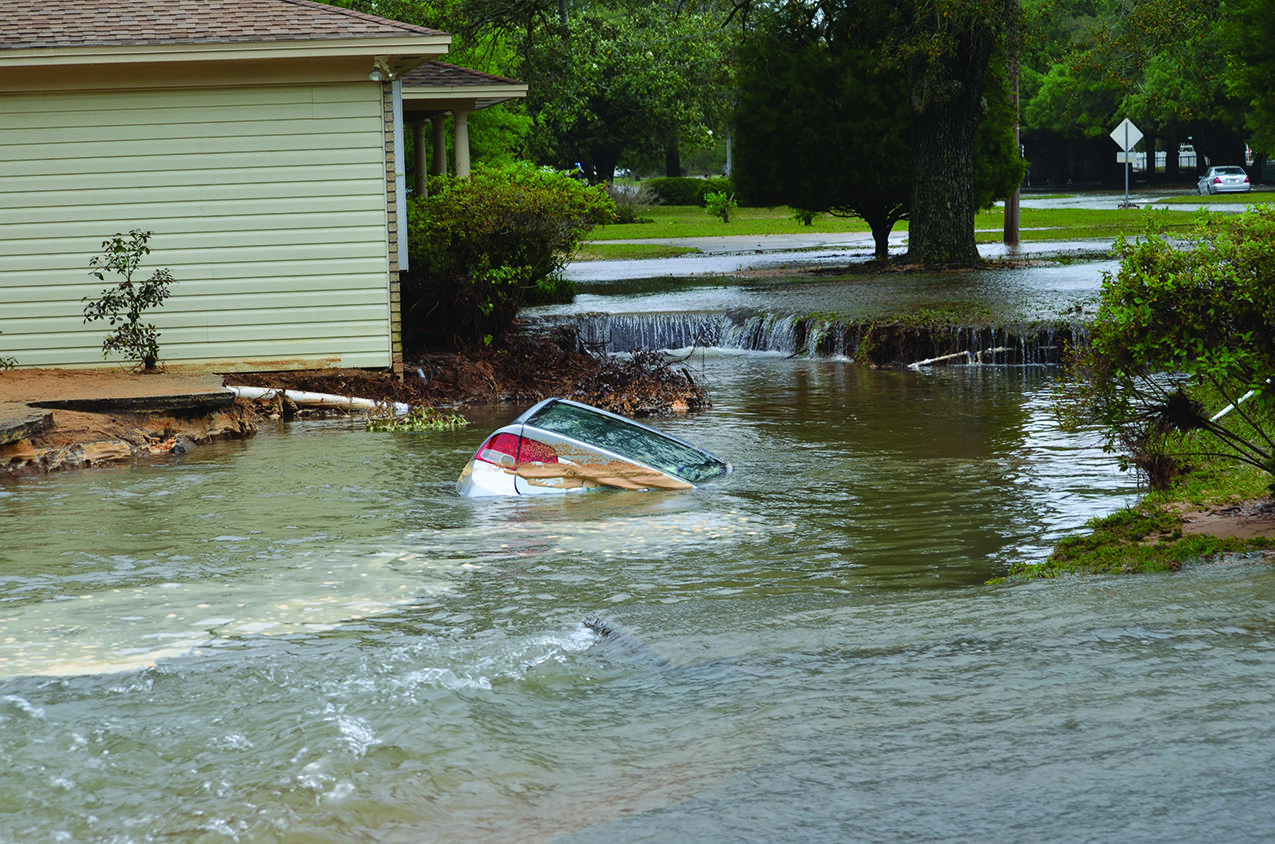
The risk of flooding has intensified
Extreme weather affects the planet every year. Extreme conditions have the potential to cause widespread damage, uproot families, and disrupt daily life.
People may feel there has been an uptick in the number of strong storms producing flooding conditions in recent years. Such storms have led water to seep through closed doors, inundated storm drains, caused swimming pools to overflow, and threatened low-lying neighborhoods with flooding.
According to the Environmental Defense Fund, global warming from climate change produces more evaporation and moisture in the atmosphere. This can translate into intensified rainfall. Every 1-degree F rise in temperature can mean 4 percent more water vapor in the air. Recent research indicates that hot, wet conditions are expected to be more common in the future.
According to research from NASA, the proportion of people across the globe living in flood-prone areas has risen to 24 percent since 2000. The National Oceanic and Atmospheric Administration’s Office for Coastal Management says annual occurrences of tidal flooding have increased five- to 10-fold since the 1960s in several coastal areas in the United States. In addition, research from the First Street Foundation points to “significant” increasing flood risk over the next 30 years along the Atlantic and Gulf Coasts and a “large” jump in risk for the northwestern U.S. Data from the Emergency Events Database says flooding has caused $1.3 trillion in damages between 1900 and 2021. Researchers project sea levels along U.S. coastlines will rise by 0.25 to 0.3 meters by 2050, increasing the risk of severe flooding.
A study published in Science Advances identified New York City among the coastal cities with a high flood risk. Additional cities with a high flood risk include Norfolk, VA; Charleston, SC; Jacksonville, FL; Miami, FL; Mobile, AL; New Orleans, LA; and Houston, TX.
An increase in precipitation is not the only factor in flooding. A number of variables, including drainage density, population density, building height, elevation, and distance from rivers and the coast, can affect flood risk.
More and more areas are increasingly vulnerable to flooding. Up-to-date flood risk information can help people make wise choices about where to live to avoid flood-prone areas.
