
Weekly vegetable update: 6/15/2022
UNIVERSITY OF MINNESOTA EXTENSION - www.extension.umn.edu
This week included a variety of extremes: heavy rainfall in some places, no rain in others, and our first really hot day of the season. Most crops are catching up quickly after the cold spring, and the rest of the month is supposed to be hot. Take some time this week to come up with a heat safety plan for yourself and your employees, and to take stock of insects and diseases as they start to ramp up for the season.
Crop updates
- Lettuce: This spring has been excellent for lettuce. Climatologists are predicting a hotter than normal second half of June, so as we move into summer plantings, make sure you're prioritizing heat tolerant varieties. I've started to see scattered reports of bottom rot, which can be exacerbated by high humidity and limited airflow as lettuce heads begin to mature.
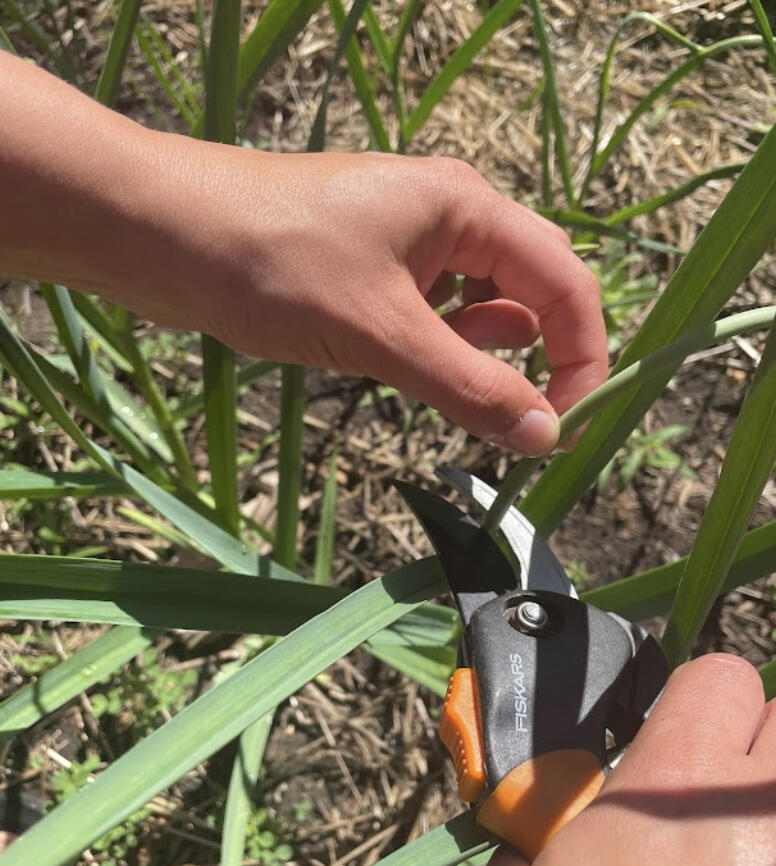
- Garlic: A few growers have begun to report the emergence of scapes in their garlic. Ideally, cut each scape by hand as early as possible; waiting to cut can reduce bulb yields. It's worth taking the time to do this very carefully, as research in Ontario has shown that damaging the leaves in this process can significantly reduce bulb yields. For growers who are really excited about garlic, you can learn more about these results in this week's Ontario vegetable update.
 |
| Remove scapes carefully to avoid damage to leaves. Photo: Natalie Hoidal |
- Onions: So far the cool weather has kept onion thrip populations low, but as the weather warms up and stays warm, start scouting more regularly for onion thrips. Many growers had high populations last year. Check out the Midwest Vegetable Production Guide for pesticide recommendations.
- Peas: The first few field grown peas are arriving, at least in Southern Minnesota. If you're seeing bleached white looking new growth on your pea plants please let me know - I am tracking a potential problem and wondering how widespread it is.
- Asparagus: Asparagus season is nearing its end. Here are three ways to know that you should stop harvesting soon (taken from the Growing Asparagus in Minnesota Guide): 1. Spear growth and emergence has slowed down considerably, 2. Spear width is less than pencil size, 3. Heads are ferning out (expanding) on spears less than 6 inches tall.
- Cole crops: Cole crop success has been highly variable. Some growers are reporting a fleabeetle-pocalypse, while others are seeing relatively low populations compared to previous years. This has significantly impacted growth, with some Brassica plants way behind schedule. Many growers are moving beyond turnips and radishes into the more exciting realms of kohlrabi, bok choi, and even some broccolini. Now that all of our Brassica pests are here, make sure to read Marissa's article for a management refresher.
 |
| Light to moderate flea beetle feeding damage on turnips. Photo: Natalie Hoidal |
- Tomatoes: The very first tomatoes are ripening in high tunnels. This is the time of year we start to get a lot of questions about blossom end rot and yellow shoulder, as the first fruits tend to be the most severely affected, at least for blossom end rot. The key is usually consistent irrigation.
Problems in the field / things to do this week
Beating the heat
 |
| Chart: US Army Public Health Center |
Sulfur deficiencies, an unexpected side effect of reducing coal emissions
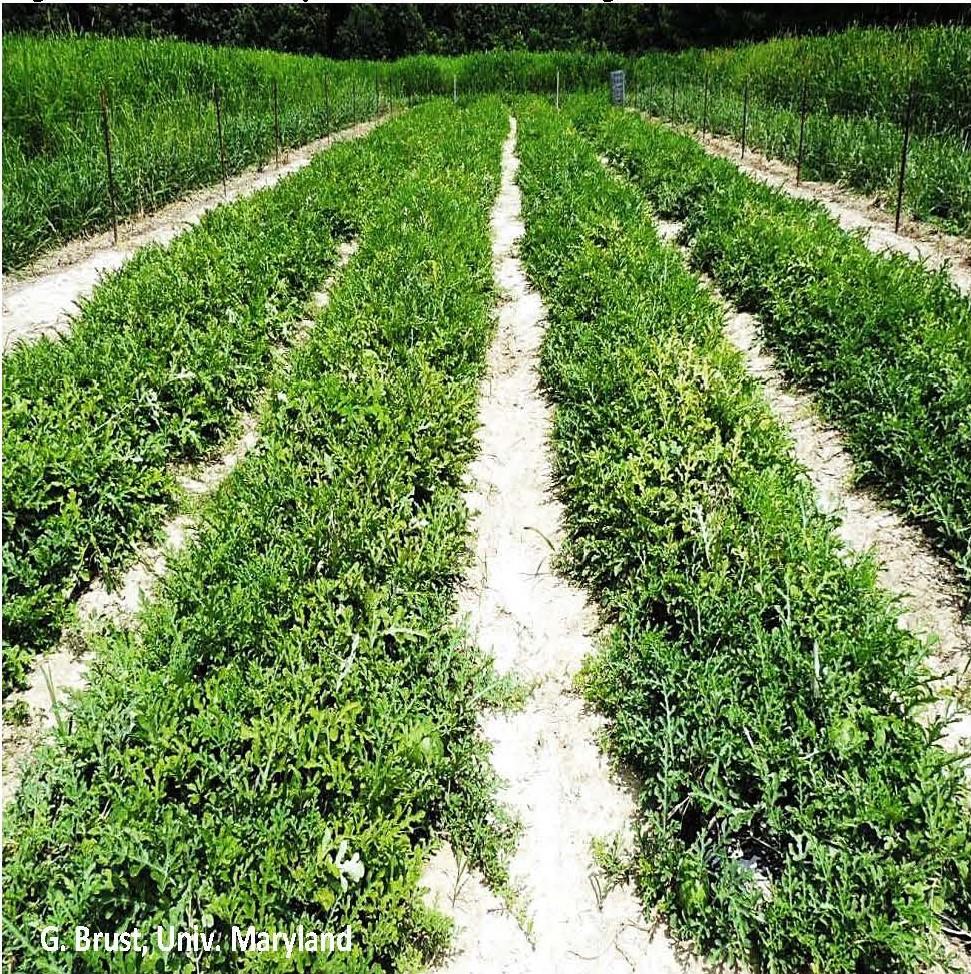 |
| Sulfur deficient watermelons, Photo: G. Brust, University of Maryland |
Flooded fields
- Don't do what I'm doing in the photo below. It's tempting to go out and inspect the damage, but it's better to wait it out until the field has drained a bit. Moving through wet fields and inspecting plants can lead to soil compaction, and you can spread disease in the process.
- After a heavy rain fall, wait until your crops have dried to fix any trellising or to prune out damaged plant parts.
- Scout your crops frequently following extreme weather events and consider spraying if you see any signs of disease to ensure that it does not spread further via wounds (e.g. wounds from hail damage, stems snapping off in heavy winds, etc.) You can send photos to our team via the form below to help you identify any issues you're seeing.
- Any edible portions of produce were touched by floodwater may be contaminated and should not be considered safe to eat.
.JPG) |
| Corn plants after 4" of rain in Waseca this week. Photo: Natalie Hoidal |
Connect with the fruit & vegetable team
If you're seeing interesting things in your fields, need help identifying problems, or just want to share photos, we'd love to hear from you! Growers can reach out directly to me any time at hoida016@umn.edu, and you can submit questions and diagnostic help through our website.
