
Weekly vegetable update 5/26/2021
UNIVERSITY OF MINNESOTA EXTENSION - www.extension.umn.edu
If you're seeing interesting things in your fields, need help identifying problems, or just want to share photos, we'd love to hear from you! Growers can reach out directly to me any time at hoida016@umn.edu, and you can submit questions and diagnostic help here.
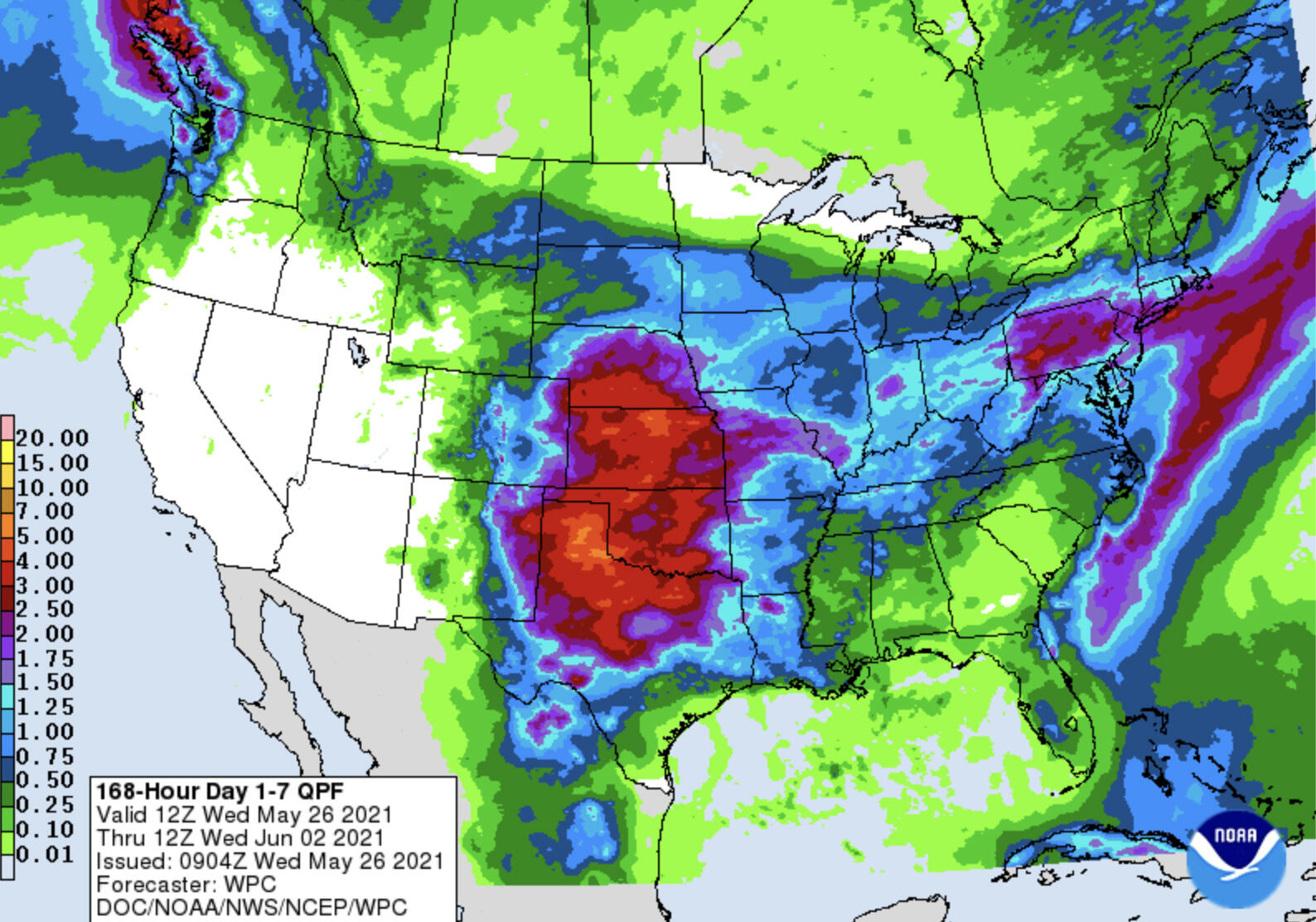
Vegetable weather report

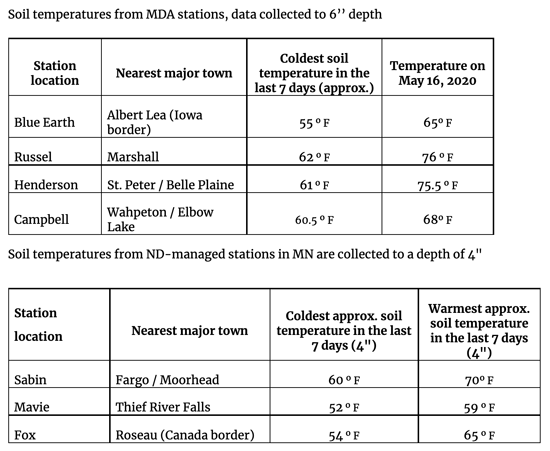
Soil temperatures are warming very quickly. Temperatures are now in the mid-60's, so if you've not done so already, you can begin transplanting warm season crops into the field following this short cold-snap. The Minnesota Department of Agriculture publishes daily updated soil temperatures for major field crop growing regions of the state. Data is compiled from MDA managed stations in the Southern half of the state, and NDAWN managed stations in the northern half. As such, the data is presented slightly differently. The following tables provide a snapshot of soil temperatures across the state. For more detailed info, see https://app.gisdata.mn.gov/mda-soiltemp/
Crop updates
- Cole crops: The first few successions of Brassicas are planted. We're starting to see significant flea beetle pressure. (Click here for more info about flea beetle management). Adult cabbage maggots have emerged across most of the state, and will emerge across the entire state within the week. I haven't heard any reports of significant damage so far from cabbage maggots, but one farm did have an odd case of cutworms destroying an entire crop. I noticed some Alternaria leaf spot on the garlic mustard in the woods this week - a good reminder to manage secondary hosts!
 |
| Flea beetles are emerging in full force. Photo: NH |
- Sweet corn: Soil temperatures are now warm enough across the state to transplant / plant sweet corn. Many farmers are onto their third or fourth succession in the southern part of the state. European corn borers have emerged and will start laying eggs in the southern half of the state within the week. Seedcorn maggot is still active.
- Lettuce: Outdoor and high tunnel lettuce is looking great!
- Carrots and beets: Continue to provide irrigation through germination, especially if your soils are prone to crusting. Hot weather after rainfall can lead to crusting in clay soils, which can prevent germination and sever recently germinated seedlings. Carrots and beets, being very small-seeded crops, are quite susceptible.
- Onions: Most onions have a couple of leaves at this point. Since soil temperatures are warming up, seedcorn maggot should no longer be an issue in the weeks to come (it may still cause problems for about a week or so until the soil consistently reaches about 70 degrees).
- Garlic: Garlic is generally looking good. Plants are beginning to shift their energy towards bulb production, and will be doing so for the next month or so. Keep your soil moisture consistent for larger, more consistent bulbs.
- Asparagus: Asparagus harvest is well under way.
- Potatoes: Potatoes are emerging, and potato beetles are emerging right on cue. Take some time to practice good weed control at this point before the canopy develops. This is also one of the best times to start managing for potato beetles - things like trenches and row cover are most effective on adult overwintering beetles. Keep an eye out for egg masses; when you see them you can begin to apply preventative products like neem and Bt (these products are not effective as rescue treatments, as they take a few weeks to work).
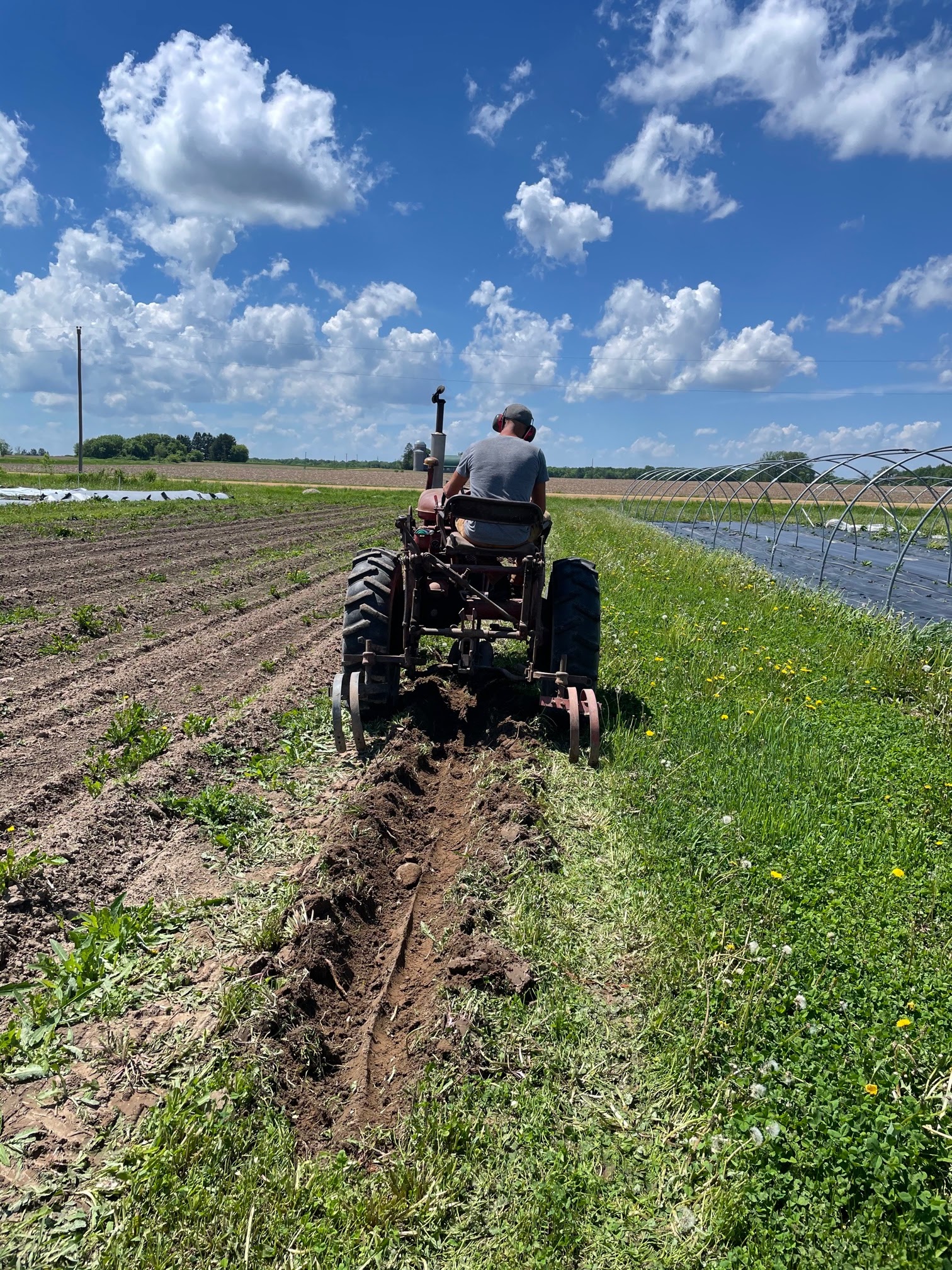 |
| Trenches can help to reduce potato beetle populations, but are only effective at keeping first generation adults out. This trench was dug with belly-mounted disks. Photo: NH |
- Cucurbits: Most cucumbers and melons have been transplanted at this point, and pumpkin and squash direct-seeding is well underway. I've seen quite a few wilting and genearlly stressed cucumbers and melons - since these crops are very prone to transplant shock, it's important to keep them well watered. The situations where I've seen issues are in fields using drip irrigation, where the drip line isn't close enough to the plant, and the roots haven't developed enough to reach the water yet. No cucumber beetle sightings so far, but anticipate them very soon.
- Tomatoes: Tomatoes are again all over the place, ranging from the flowering stage in tunnels, to just being transplanted in both tunnels and the field.
Problems in the field and things to anticipate this week
Sprouting straw mulch
- If you are not an organic grower, you can of course spray, which is the quickest and easiest way to manage sprouting walkways.
- If your straw is from spring wheat, spring rye, or oats, these cereals do not require vernalization (a cold period) to set seed. As such, one option is to let them grow until the growing point is above the height of your mower, and mow them off. If your sprouting straw is at the 2 leaf stage, you could likely reach this point in about 5-6 weeks. How do you know where the growing point is? From Jared Goplen, UMN Crops educator: "The stem will be hollow after the growing point passes through. It will also leave nodes on the stem as it passes so if you feel nodes up off the soil surface a few inches (above where the mower will cut it off), you should be good to go."
- If your straw is from winter wheat or rye, your straw should not go to seed at all this summer, meaning mowing will not kill it. A such, a better option would be to mow frequently to avoid competition with your crop (or to attempt to remove it entirely).
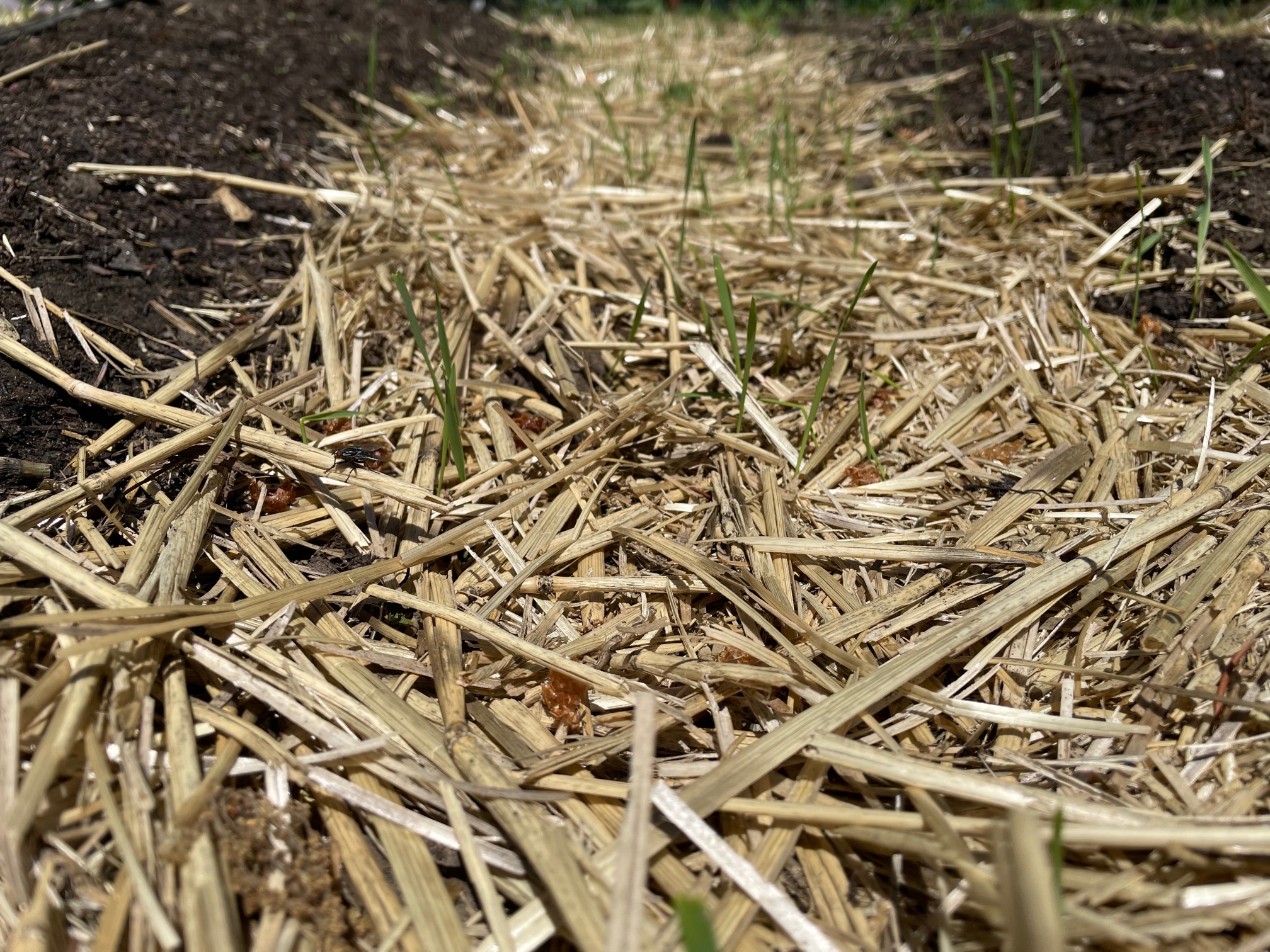 |
| Sprouting straw mulch. Photo: NH |
High tunnel and greenhouse viruses
 |
| Impatiens Necrotic Spot Virus symtpoms on peppers. Photo: NH |
Cutworms (section written by Marissa Schuh)
There have been some isolated reports of cutworm feeding in vegetables. Cutworms are an uncommon and hard to deal with pest. There are many cutworms, all with slightly different biologies (which can make it hard to know how likely the issues are to occur again). The core biology is the same, with caterpillars hiding by day and feeding by night. This feeding starts at out on the leaves, but as caterpillars grow they cause the cutting for which they get their name. By the time they are old enough to cut, they are large caterpillars that can be extra hard to control with insecticides (not to mention they spend the day hiding in the soil). This might be another pest to chock up to bad luck this season, and then look at your farming system over the winter. Like seedcorn maggot, these guys like recently terminated cover crops, so again, stretching out the window between termination and planting makes the site less attractive to cutworms. Weed control can also help.
Educational opportunities
